PRODUCT
Interval Funds
Interval funds are built for long-term investors seeking broader opportunity sets. With periodic liquidity windows and flexible structures, they provide access to investment strategies – public or private – not easily captured through traditional open-end funds.
Discover the Power of Interval Funds
Looking for more from your portfolio? Interval funds can offer access to private market strategies, such as private equity, private credit, real estate, municipals, and infrastructure. Broad exposure by vintage year, sector, geography and sponsor may also be available – without the steep hurdles traditionally tied to these opportunities.
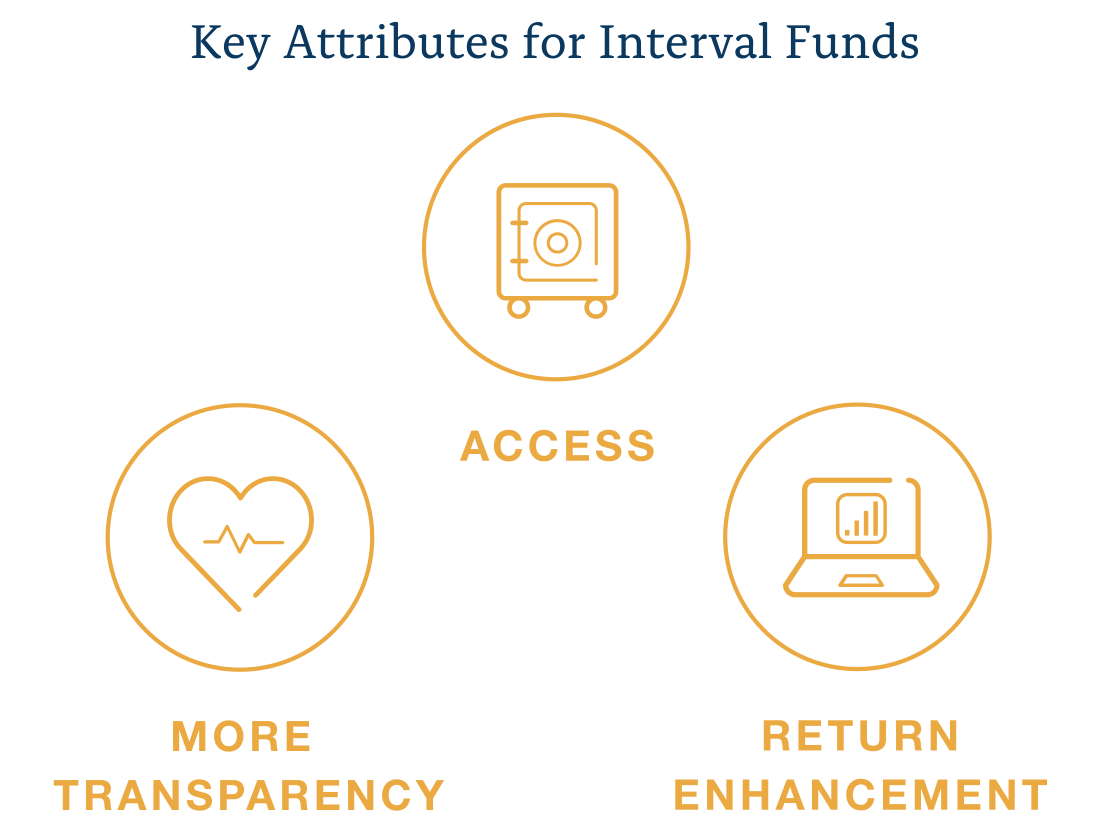
These professionally managed funds are built with the individual investor in mind. With lower investment minimums, greater transparency, and periodic liquidity windows1, they provide a more flexible way to tap into asset classes once reserved for institutions.
What can interval funds offer you?
• Diversification beyond public markets
• Potential for enhanced returns through alternative sources
• Long-term investment approach while still offering periodic access to your money
• Structural features of interval funds include more transparency than traditional private equity offerings through registration under the Investment Company Act of 1940, standard mutual fund tax reporting on Form 1099, and detailed portfolio disclosures
What are interval funds?
Today’s investors may be looking for ways to diversify their portfolio and enhance returns, while also having periodic liquidity and transparency. Interval funds are a type of investment vehicle that may offer these benefits and more.

Interval funds are closed-end funds that invest in less liquid and alternative assets, such as private and public equity and credit. These assets can potentially offer higher risk-adjusted returns, higher income, and diversification benefits for your portfolio.
Interval funds also have many features designed to prioritize shareholder interests, such as adherence to regulatory guidelines, periodic liquidity options, and simplified tax reporting.
Unlike traditional mutual funds, interval funds do not provide daily liquidity. Instead, they offer to repurchase a limited percentage of shares at periodic intervals,1 usually quarterly, at net asset value (NAV). This allows interval funds to invest in less liquid strategies without facing redemption pressures.
Interval funds are also different from private funds, which may have substantial minimum investment requirements, a multi-year lock-ups, and limited transparency.

Find more about interval funds, how they work, and how they compare to other investment vehicles.


NYLIM MacKay Muni Income Opportunities Fund
Access Active, Dynamic Approach to Municipal Investing. Offers a dynamic “turn-key” solution to allocating between investment grade municipals and high yield municipals that adjusts with changes to relative value.
NOTE: On October 1, 2026, Bow River Advisers and its employees fully integrated with Apogem Capital, and the Bow River Capital Evergreen Fund became the Apogem Evergreen Fund. This change to the Fund’s management was approved by the Fund’s shareholders on August 31, 2026. There have been no other changes to the investment strategy, objectives, or terms of the Fund, and the team remains in place, now as employees of Apogem Capital. All references in materials to Bow River Advisers or Bow River Capital no longer apply and will change to Apogem Evergreen and Apogem Capital.
www.apogemevergreen.com Read the prospectus carefully. An offer can only be made by the prospectus and only in jurisdictions in which such an offer would be lawful. The prospectus contains important information concerning risk factors and other material aspects of the Fund to carefully consider and must be read carefully before a decision to invest is made. An investor should consider the Fund’s investment objectives, risks, charges and expenses before investing. This and other important information can be found in the Fund’s prospectus. To obtain a prospectus, please visit www.apogemevergreen.com before investing.
Interval Fund Risk Disclosure: The Funds are interval closed-end funds. Investing in interval closed-end funds involves risk, including the possible loss of principal. Interval funds are generally considered illiquid investments and do not provide investors with daily liquidity. Although the Funds will make periodic offers to repurchase a portion of their outstanding shares, there is no guarantee that shareholders will be able to sell all of their tendered shares during a particular repurchase offer. If a repurchase offer is oversubscribed, shares may be repurchased on a pro rata basis, and investors may be unable to liquidate all or a given percentage of their investment during a particular repurchase offer. Investors should carefully consider a Fund’s investment objectives, risks, charges and expenses before investing.
Institutional quality private equity refers to a portfolio of investment exposures that are typically only available to institutional investors as well as one that provides broad exposure by vintage year, sector, geography and sponsor.
General Disclosure: This material is not intended to be a recommendation or investment advice and does not constitute a solicitation to buy, sell or hold a security or an investment strategy. The information provided does not consider the specific objectives or circumstances of any particular investor or suggest any specific course of action. Investment decisions should be made based on an investor’s objectives and circumstances and in consultation with his or her financial professional.