
- September CPI rose 0.6% MOM, while PPI, which measures producer prices, increased 1.3%. Gasoline accounted for more than half the CPI increase, while higher diesel prices helped drive the rise in PPI. The concern is that rising fuel costs could push up transportation costs and eventually prices for other goods and services. In our view, these inflation pressures strengthen the case for another Fed hike this year.
- The U.S. 10-year Treasury yield has fallen back toward 5% as an AI-driven equity selloff sends investors into more defensive assets. We are encouraged that the pace of the Treasury selloff has slowed but continue to expect volatility in long rates driven by a combination of rising inflation expectations, a more hawkish policy path, and a rising term premium. We favor a buy-and-hold approach in shorter maturity credit, paired with selective long-duration opportunities in steeper yield curves, including those for municipal bonds.
Key Note
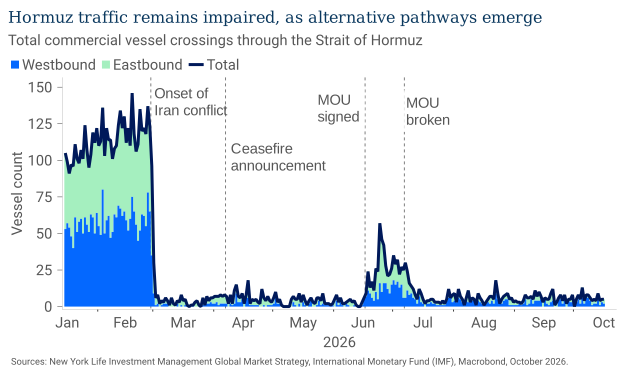
Now in its eighth month, the Iran conflict is testing how long the global economy can absorb disrupted energy flows. Oil supply buffers are thinning, and the pressure is again spreading beyond crude oil to the fuels that keep consumers and businesses running. The range of possible outcomes remains wide. Where oil prices settle, and how long they stay there, will shape the global outlook for growth and inflation. This week, we examine the diplomatic impasse, the growing strain in energy markets, and three potential paths forward for the conflict.
Recent From the Desk responses
- A hawkish hold with a focus on price stability
- From blockade to breakthrough?
- May CPI: Energy prices keep pressure on inflation
Recent deep dive research
- Private Markets: Separating signal from noise in private credit
- The IPO wave that could reshape the market
- Trends in market structure: digital assets
- Geopolitics: Geopolitical risk in a shifting world order
- Geopolitics: Iran, markets, and the new age of geopolitical leverage
- Macro Pulse: Tech delivers, while diplomacy wavers
Recent From the Desk responses
- A hawkish hold with a focus on price stability
- From blockade to breakthrough?
- May CPI: Energy prices keep pressure on inflation
Recent deep dive research
- Private Markets: Separating signal from noise in private credit
- The IPO wave that could reshape the market
- Trends in market structure: digital assets
- Geopolitics: Geopolitical risk in a shifting world order
- Geopolitics: Iran, markets, and the new age of geopolitical leverage
- Macro Pulse: Tech delivers, while diplomacy wavers
Diplomacy buys time, but no breakthrough
Diplomacy has paused further escalation of the conflict, but the path to a lasting agreement remains elusive. Iran has made the reopening of Hormuz conditional on sanctions relief and a broader ceasefire. The U.S. and Iran remain divided over the sequencing of those steps. Meanwhile, additional U.S. naval deployments strengthen Washington’s ability to launch renewed strikes if negotiations fail.
President Trump has said that the U.S. will not attack Iran before the November 3 midterms, giving diplomacy more time. As we have been highlighting throughout the conflict, we believe the test for investors is whether negotiations produce sustained, safe passage through Hormuz. The bar for restoring traffic through the Strait is high: further attempts at negotiations could bring immediate market relief, but restoring confidence among shippers and insurers will likely require true alignment between the U.S. and Iran.
The energy squeeze spreads beyond crude
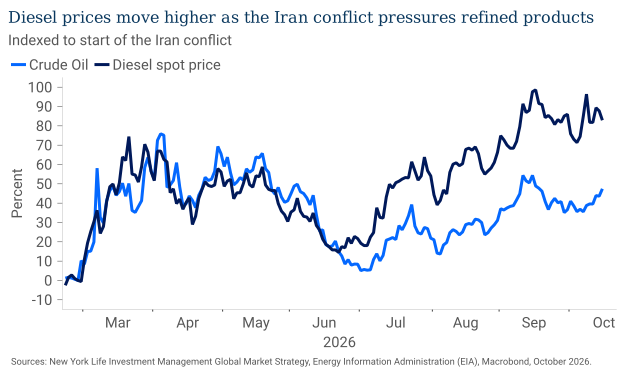
The energy shock persists even as some crude exports resume. Refinery damage and elevated shipping costs have constrained how much usable fuel reaches consumers. Increased oil flows through the Strait offer some relief but cannot offset lost refining capacity or the higher costs of transporting fuel to the end markets.
Diesel, a fuel refined from oil and primarily used to power trucks and heavy machinery, highlights the pressure on fuel supplies. Its price has pulled away from crude as shortages push up the premium for turning oil into finished fuel, a difference known as the “crack spread.” This makes fuel availability an increasingly important challenge for policymakers. Releasing national-level crude reserves can ease supply pressures but does little to address refined fuel shortages.
We are watching diesel prices and transportation costs alongside crude oil prices as a core input to our inflation view. Persistent fuel shortages could keep transportation and manufacturing costs elevated and strain household budgets, even if oil prices ease.
Three scenarios and what they mean for markets
Where can the conflict go from here? Looking ahead, we see three potential outcomes: a negotiated reopening of the Strait, a prolonged stalemate, or renewed escalation. Each carries different implications for inflation, rates, and risk assets. Even in the most constructive scenario, reopening Hormuz could provide near-term relief, but restoring damaged energy infrastructure and normal fuel supplies would take longer.

Portfolio strategy
Given the range of potential outcomes, we favor a barbell approach across equities and credit that balances exposure to continued energy disruptions with opportunities from a potential recovery.
On one side, energy producers and select refiners could benefit from higher oil prices and tight fuel supplies. In credit markets, energy companies with strong balance sheets could also benefit from higher cash flows and improved debt repayment capacity.
On the other side, technology offers exposure to longer-term growth, while cyclical stocks could benefit as energy costs decline and economic conditions improve. Select technology and cyclical credit could also benefit from stronger earnings and tighter credit spreads.
This approach helps position portfolios for continued energy disruptions while maintaining exposure to a potential recovery. Careful security selection remains important, particularly for companies whose profit margins are vulnerable to higher fuel costs.
This material contains general information only and does not take into account an individual’s financial circumstances. This information should not be relied upon as a primary basis for an investment decision. Rather, an assessment should be made as to whether the information is appropriate in individual circumstances and consideration should be given to talking to a financial advisor before making an investment decision.



By subscribing you are consenting to receive personalized online advertisements from New York Life Investment Management.

Resilience Meets Tighter Policy
Key Takeaways from the 2026 NYLIM Global Investor Summit
Midterms 2026: The Stakes Beyond the Ballot Box
Private Markets Outlook: Resilience in an Evolving Landscape
The Long End Takes the Wheel
A Fresh View on Volatility